University history

The path since 1943: from the Institute of Building Materials Technology to the largest multidisciplinary university in the country.

Since 1943

Multidisciplinary University of the Republic of Kazakhstan

South Kazakhstan University named after M. Auezov is the largest and multidisciplinary university of the Republic of Kazakhstan, scientific, educational, intellectual, cultural center of the region.

1943year founded
328educational programmes
284partner universities
240accredited programmes

Timeline

1943

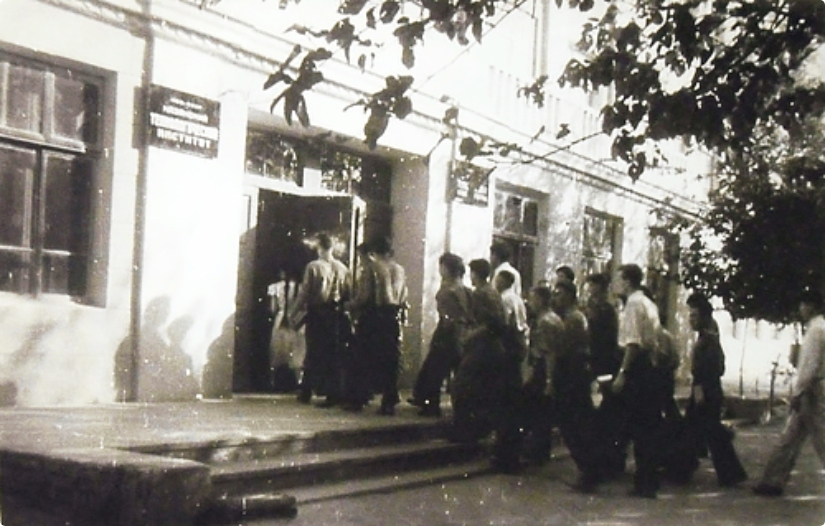
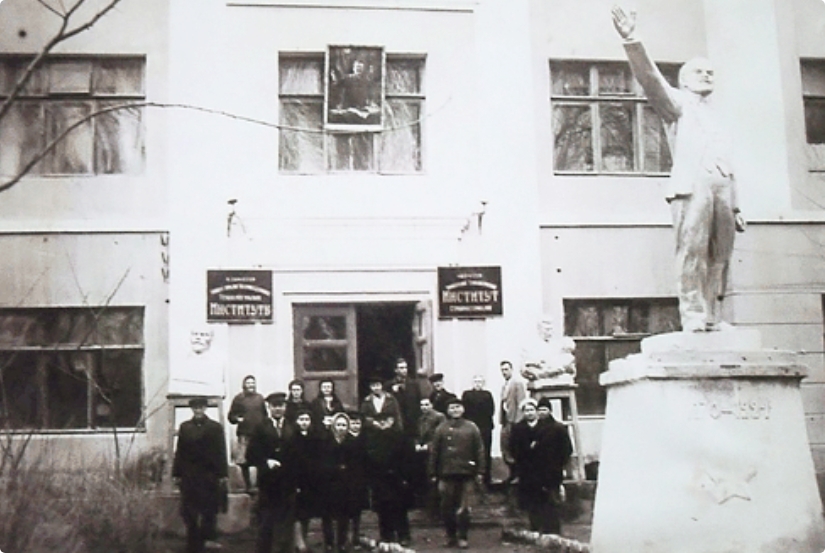
During the Great War, Kazakhstan and the Central Asian republics faced a demand for specialized engineering personnel in the construction and building materials industries. In response, on June 19, 1943, the Council of People's Commissars of the USSR issued Order No. 679, establishing the Institute of Building Materials Technology in Shymkent.

The institute was given the building of the teacher training school on Sovetskaya Street (now Kazybek Bi Street), and K. A. Delyaur, who had moved from Kharkov, was appointed to head the new institution. He contributed greatly to the opening of the institute by proving to the authorities, with convincing facts, how necessary it was to train qualified specialists for the construction industry.

In the first academic year the institute had two faculties — technology and mining — and 7 departments. It employed only 18 teachers, including 2 professors and 5 associate professors.

The nationalities of the roughly 240 students of the first year were as follows: 1 Kazakh, 108 Russians, 87 Jews, 30 Ukrainians, 1 Belarusian, 2 Uzbeks, 1 Korean, 3 Tatars and 2 Armenians.

The small number of local nationalities among the teachers and students of the new institution was due to the fact that its staff and students were mostly evacuees from Ukraine.

During the war years the institute’s staff, like other institutions, collected in-kind and cash donations for the defense fund, took part in the construction of a hydroelectric station and actively helped collective farms with seasonal work such as harvesting grain and cotton.

1944

After K. Delyaur, Safa Umbetalin headed the institute in 1944. Paying particular attention to raising the qualifications of the teaching staff, he secured the opening of the “Silicate Technology” and “Physics” laboratories and the formation of the institute’s material base — in particular, he began construction of a dormitory for 500 students and a teaching building for 700 seats.

1948

In 1948 the institute graduated its first 23 specialists as silicate technology engineers. Of the 29 graduates of 1950, two were sent to enterprises in Kazakhstan, three to Uzbekistan, one to Tajikistan, two to Bashkortostan, two to Armenia, six to Siberia, two to the Far East, one to central Russia and two to Ukraine. The institute’s specialists were in wide demand across the whole Union.

1948–1957

In 1948–1957 the institute graduated 532 specialists. In 1956 it admitted students for the first time to the specialty “Machines and Apparatus of Chemical Production”. In 1957 the specialties “Refrigerating and Compressor Machines and Units”, “Meat and Dairy Technology” and “Grain Storage and Processing Technology” were opened.

In 1957, when Arkady Vladimirovich Izmailov was director of the institute, the technological and mechanical faculties were operating.

1958

In 1958 K. Bilyalov became head of the institution. During his short term, particular attention was paid to training specialists in the fields most needed for the republic’s economy; the institute, reorganized as the Kazakh Institute of Technology, became one of the country’s leading higher education institutions. He did much to strengthen its material base and helped secure funds for building a complex of teaching buildings.

By order of the USSR Ministry of Higher Education, an evening branch of the Kazakh Institute of Technology opened in Dzhambul in 1958 and a full-time faculty was established there in 1959. On its basis the Dzhambul Technological Institute of Light and Food Industry was later opened.

1959

In 1959 a graduate of the institute, 30-year-old S. T. Suleimenov, was appointed rector. Sultan Tashirbayevich devoted all his strength and knowledge to developing the institution’s material base and scientific potential. During his leadership the main university building, teaching buildings “A” and “B”, 4 student dormitories, a canteen, a recreation camp in the Mashat gorge and teaching, laboratory and sports complexes were built. Under Suleimenov the institute became known as a major university: 7 faculties, 33 departments, 304 teachers, of whom 39 were candidates of sciences and associate professors, and nearly 5,000 students. Of the institute’s postgraduates, 21 defended candidate dissertations, and 2,082 graduates received an engineering qualification and worked productively in various branches of the national economy.

1963

In 1963, by order of the Ministry of Higher and Secondary Specialized Education of the Kazakh SSR, a branch of the Kazakh Institute of Technology opened in Semey and later became the Institute of Food Industry Technology. Thus the Kazakh Institute of Technology in Shymkent gave rise to two independent higher education institutions, which later grew into major centers of education.

In the 1963–1964 academic year the number of students reached 4,312, of whom 1,212 were Kazakh students, including 195 Kazakh women. Over these years the institute library’s collection grew from 7,000 to 111,457 volumes.

1975–1980

In 1975–1980 the institution was headed by Z. Moldakhmetov. During this period teaching building “V” was built. On the initiative of Zeinulla Moldakhmetovich, the 1st All-Union conference “Modern Machines and Apparatus of Chemical Production” was held in 1977, and in 1979 the All-Union school of theoretical chemistry was founded.

1980–1987

Sh. M. Moldabekov, who had risen at this institution from an ordinary assistant to teacher, associate professor, head of department and vice-rector, led it in 1980–1987. During this period 2 student dormitories, 2 residential buildings for teachers and many new facilities in the Mashat health complex were built; the institute became the university with the best social and living conditions among the republic’s universities.

Considerable success was also achieved in research. In 1980 the institute had 133 candidates of sciences but no doctors of sciences at all. Thanks to persistent work and sincere care, within 7–8 years — by 1988 — the number of candidates of sciences grew to 276 and of doctors of sciences to 13. New branch and problem research laboratories, 3 scientific-industrial teaching complexes and 7 branches at enterprises were organized, and research was closely tied to production.

1988–1997

In 1988–1991, when the institute was headed by M. K. Nauryzbaev, teaching and laboratory buildings “G” and “D” were commissioned, and in 1991–1997, under the leadership of T. Sh. Kalmenov, the Kazakh Chemical-Technological Institute was reorganized into the South Kazakhstan Technical University and became one of the country’s leading technical universities.

When A. I. Ainabekov was rector in 1997–1998, doctoral and postgraduate programmes were opened in colloid chemistry, non-ferrous metal technology and mechanics, and conditions were created for the best students to study free of charge at Russian universities after their second year. The scientific journal “Science and Education of South Kazakhstan” also began to appear.

1998

In 1996, by Government Resolution No. 573 of the Republic of Kazakhstan, the institution was named the Kazakh Chemical-Technological University, and in 1998, by Government Resolution No. 256, on the basis of the merger of the South Kazakhstan Technical University and the South Kazakhstan Humanitarian University, it was reorganized into the M. Auezov South Kazakhstan State University. The South Kazakhstan Humanitarian University had arisen from the merger of the Shymkent Institute of Pedagogical Culture and the Shymkent Institute of Physical Culture. The Institute of Pedagogical Culture was headed by S. T. Temirbekov in 1967–1977 and by M. Zh. Zhunisbaev in 1977–1996, and the Shymkent Institute of Physical Culture by M. S. Saparbaev in 1990–1996.

E. U. Medeuov, appointed rector of the South Kazakhstan Humanitarian University in 1996, led the M. Auezov South Kazakhstan State University from 1998 to 2001. Paying great attention to retaining highly qualified staff, he made every effort to introduce a system of additional pay for teachers.

2001–2011

The new dynamic period in the university’s development is linked with the name of Valikhan Kozykeevich Bishimbaev. During the ten years of his leadership, 2001–2011, the university became one of the leaders among the country’s universities. It is no accident that in this period the university was the first among domestic universities to undergo international accreditation for seven educational programmes (and later six more). In the ranking of Kazakhstan’s multidisciplinary universities, over the last 5–6 years it consistently placed in the top five, and by the number of state educational grants won it entered the top three.

And only a large-scale personality can lead such a team. Valikhan Bishimbaev was the initiator of the introduction of a module-rating system, credit technology, and a quality management system into the educational process. According to the results of 2005, Valikhan Kozykeevich was awarded the title of "The Best Inventor of Kazakhstan". Valikhan Kozykeevich Bishimbaev - deputy of the regional maslikhat, member of the Central Office of the Nur Otan party. He was awarded high state awards: the Orders of the Badge of Honor, Kurmet and others.

2002

The progress of students reached 90%, the number of excellent students increased to 11%. In 2002, as an experiment, the teaching of special disciplines in English was introduced in certain specialties.

2007

In 2007, our university won 2375 grants, including 900 in technical specialties, which allowed our university to take 3rd place in the country in terms of the number of grants. The university has created educational, scientific and industrial complexes together with the leading enterprises of the region, such as JSC "Interkomshina", JSC "Shymkentcement", LLP "Kazphosphate", JSC "Petrokazakhstan", JSC "Melange", "South-West Agrarian Center". In UNPK, teaching students is fundamentally different from the currently accepted teaching principles.

In total, the university has 457 classrooms, 130 laboratory classrooms, 49 computer classes. More than 1800 computers are used in the educational process, of which 85% are new generation computers, 1540 computers are connected to the Internet.

Over 600 million tenge was spent on re-equipment and creation of a modern material and technical base by the university, of which over 300 million tenge was spent only on the purchase of the latest equipment. In the current year, a regional engineering laboratory of structural and biochemical materials is being created at the university (funding is 200 million tenge).

The most modern laboratory units for distillation of oil, determination of the fractional composition of crude oil, determination of the rheological properties of oil road bitumen that meet European standards have been purchased.

A Linguistic Center has been opened at the university, where students and teachers are trained in foreign languages.

2012

From 2012 the university was headed by Zhumakhan Ushkempirovich Myrkhalykov. Under his leadership a new system of research management was introduced, and the number of research and educational projects being carried out grew 3.5 times. In the republican youth competition “Innovative Kazakhstan” organized by the Samruk-Kazyna National Welfare Fund, the M. Auezov SKSU was recognized as the second innovative university of the Republic of Kazakhstan.

Today, the university, which has a long history, is headed by Doctor of Historical Sciences, Professor, Academician of the National Academy of Sciences of the Republic of Kazakhstan Kozhamzharova D.A.

2018

In the 2018-2019 academic year, 18,145 bachelors study at the university, including 13,304 full-time, 4,180 part-time and 661 part-time students. The number of students on the basis of the state educational grant for undergraduate studies is 6085 students.

About 800 students study at the college of SKSU named after M. Auezov, of which about 600 are on the basis of state educational grants, 143 out of 170 students of the preparatory course are on the basis of state educational grants.

Out of 1,182 undergraduate students, 1,038 study on state educational grants, 106 out of 133 doctoral students study on state educational grants.

Emphasis is placed on the proper implementation of the President's program "Spiritual Revival: Orientation to the Future", its popularization among students and the media. In fact, this large-scale state program, which raises the national spirit of our youth, strengthens their patriotic qualities and promotes education in the spirit of the new Kazakhstani patriotism, has much to offer. Much work is being done in this direction. Among them are "Digital Kazakhstan", "History and Culture of the Great Steppe", "Motherland", "Young Patriot", "Golden Fund", "Creation of a multimedia program for teaching the history of Kazakhstan on geoinformation technologies", "100 new names" and others. Of particular note is the launch of projects and the opening of the scientific and methodological center "Elbasytanu".

The above data shows that the rectors who headed the university in different years played a significant role in the rise of our university to such heights. Obviously, their way of life, an instructive life, will always be an example for educated and mature people.

Among the graduates who graduated from our university and conquered the horizons of knowledge, there are many well-known people in our country, veterans of their craft. Among them are Turysbekov Z., Chanov A., Abubakirov P., Sarsenov N., Seitzhanov S., Sultanov Zh., Kolesnichenko V., Zhurinov M., Kurtaev A., Musabekov E., Khasangaliyev E., Zhunusova M., N. Iskalieva, B. Sattarkhanov and others. We are very proud that our famous compatriots are graduates of our university.

The university today

In rankings

1

In the regional QS Asian University Rankings-2024, which includes over 856 top universities in the Asian region, Auezov University ranked 144th in 2023.

2

In the global UI GreenMetric World University Rankings-2023, the university took 253rd place among 1,183 universities worldwide.

3

In the QS World University Rankings-QS WUR-2025, the university ranked 621st.

4

The university underwent an audit by the reputable British ranking agency Quacquarelli Symonds (QS), receiving four stars (☆☆☆☆) in its high rating.

5

In the QS Stars audit, the university received the highest five-star rating (☆☆☆☆☆) in the categories: "Teaching," "Employability," "Online Learning," and "Inclusiveness."

6

In the QS Sustainability-2024 ranking, the university ranked 981-1000 among 1,403 universities worldwide.

7

In the Times Higher Education Impact Rankings, the university entered the TOP 1001-1500 in 2024.

8

In the national ranking of Kazakhstan’s best universities for 2024, the university ranked second according to the Independent Agency for Quality Assurance in Education (IAQA).

The South Kazakhstan University named after Mukhtar Auezov is one of the largest higher education institutions in the country, focused on training highly qualified specialists and conducting scientific research, thereby ensuring the innovative, industrial and socio-economic development of the country in scientific terms. It is a scientific and educational university whose activities are aimed at forming a modern scientific and educational environment, where the preparation of highly qualified personnel is based on the close integration of science, education, and innovation. As one of the largest multidisciplinary universities in Kazakhstan, it is an educational, intellectual, and cultural center.

Auezov University is an institution with the largest student body in the country, with about 30,000 students enrolled in over 300 educational programs (EP) at three levels of training (bachelor's, master's, doctoral). The staff of the university, aimed at providing high-quality and competitive education, consists of about 2,000 scientists and highly qualified specialists, including 15 academicians, 14 corresponding members of various academies, 85 doctors of science, 500 candidates of science, and over 100 PhD holders. The university employs 785 masters of science and 453 invited specialists from industry.

The faculty includes more than 300 holders of the title "Best University Teacher", over 100 graduates of the international program "Bolashak", eight recipients of the State Prize in the field of science and technology, and one Nobel Prize laureate.

Currently, 21,440 students are studying at the university: 20,273 (94.5%) undergraduates, 945 master's students (4.4%), and 222 PhD (1.04%) doctoral students. The number of international students is 1,074 (5.1%).

The university runs 11 dissertation councils covering 16 educational programs and offers 328 higher and postgraduate education programs across 71 fields. This includes 174 bachelor's programs, 122 master's programs, 32 doctoral programs, and two applied bachelor's programs. In addition, a dual education program is in place with 43 industry partners.

A total of 240 educational programs are accredited, and 11 programs are accredited by the German agency ASIIN, with four bachelor's programs receiving the "Eurobachelor" quality mark and three master's programs receiving the "Euromaster" quality mark, awarded to top educational programs in the field of chemistry.

The university is actively engaged in the internationalization of education, collaborating with 284 foreign partner universities across 35 countries, including 30 strategic partners. Through these international partnerships, academic mobility for students and faculty is supported, with foreign scholars and experts contributing to teaching. The university also engages in joint projects under international programs and organizes scientific internships for master's and PhD students. Over the past two years, 352 foreign specialists from countries such as the United Kingdom, Malaysia, Turkey, Russia, Belarus, the USA, South Korea, Italy, India, and CIS countries have been invited to the university for joint academic and scientific activities.

The university is a member of 12 international associations and consortia from Europe and the CIS, including EAU, ISEKI, IAESTE, EURASHE, IWA, ECTN, the CIS Network University, and the Shanghai Cooperation Organization University, among others. It also participates in five university consortia and is a member of 15 international organizations. In partnership with leading foreign universities ranked in the QS TOP-500, 11 joint educational programs with double degrees are implemented.

Currently, the university houses the French Alliance, the King Sejong Institute Korean Education Center, and regional joint TOEFL centers. The university also offers courses in English, Chinese, French, and Korean.

Since 2021, within the framework of the international "Bolashak" program, 41 Auezov University faculty members and researchers have earned degrees and completed scientific internships at universities such as Warwick, Reading, and Central Lancashire in the UK, the University of Minnesota and the University of Illinois in the USA, Moscow State University, and others.

In 2024, university scientists won 17 projects worth 1 billion 249 million tenge. As a result of the competition for grant funding of scientific projects for 2024-2026, seven projects in five priority areas of science development were awarded funding exceeding 677 million tenge. In the "Zhas Ғalym" competition, eight projects in four priority areas were awarded more than 230 million tenge. Another project, worth over 87 million tenge, was funded for young scientists in the 2024-2026 grant competition. In the target program funding competition for scientific projects for 2024-2026, one program received 255 million tenge.

The university is currently implementing 62 projects with funding exceeding 1 billion 400 million tenge. In August 2024, university scientists won two grants worth 874,042,646 tenge in the Science Fund's commercialization grant competition. These projects will be carried out from 2024 to 2026.

As a result of the collaboration between university scientists and the National Center for Complex Processing of Mineral Raw Materials, a scientific discovery was made regarding the acceleration of the formation of iron silicides through the interaction of silicon oxide with carbon and iron. Additionally, university scientists, together with the National Academy of Science of the Republic of Kazakhstan, registered a scientific discovery concerning titanium decomposition.

A total of 178 individuals, including over 20 foreign scientists, are involved in carrying out scientific and technical projects and programs. Seventeen scientific laboratories contribute to the research process, including an accredited regional engineering profile testing laboratory for "Structural and Biochemical Materials" and a regional engineering profile certification testing laboratory.

Since March 2023, all university students have been granted access to online courses on the Coursera platform, based on a quota approved by the board of trustees of the public foundation "Kazakhstan Khalkyna" with support from the Ministry of Science and Higher Education. A total of 654 Coursera courses have been translated into the Kazakh language. More than 4,500 students from Auezov University have had the opportunity to study online courses from world-leading companies such as Meta and IBM on the Coursera platform.

Furthermore, Auezov University, as a socially responsible institution fulfilling its third mission, actively participates in the socio-political, socio-cultural life of the region and the country, fostering students as individuals with leadership and communication competencies within the context of the "whole person" concept. Within this framework, 83% of students participate in youth organizations and university self-government bodies, 40% in volunteer movements, and more than 30% in sports sections promoting a healthy lifestyle.

This year, within the framework of public-private partnership, the Shymkent construction company "TD Sunrise" delivered a hotel-type Student House for 550 places for students of Auezov University. In addition, two dormitories for 1000 students, built within the framework of PPP by the individual entrepreneur "Shartal," were put into operation. The dormitories are designed in a modern style and meet the needs of students (there are study and recreational areas, gyms, and other necessary infrastructure). Improving the living conditions of students will also have a positive impact on their academic performance.

To fulfill its third mission and provide social assistance to citizens of retirement age, Auezov University launched the "Silver University" project in 2021. This initiative aims to create opportunities for the creative and professional development of the older generation, helping them return to active work, enhance their quality of life, learn new professions, and engage actively in public life.

To streamline the educational process, simplify operations, and fully transition to a digital format, the Smart platform has been developed. It aims to save human resources, reduce risks, and increase loyalty.

Have a question?

Get in touch — we will help you find the information you need.