
★School of Natural Sciences and Pedagogy
ANNOUNCEMENT
ANNOUNCEMENT The Department of Informatics of M. Auezov South Kazakhstan University announces that the extended departmental research seminar (pre-defense) of the doctoral dissertation submitted by Elmira Tlesovna Abdrashova for the degree of Doctor of Philosophy (PhD) in the Educational Program 8D01503 – Informatics will be held. Dissertation title: «Formation of methodological competence of future computer science teachers based on digital learning models». Language of the pre-defense: Kazakh. The dissertation is submitted in the form of a dissertation manuscript. Domestic Scientific Consultant:
Zhanar S. Kemelbekova, Candidate of Technical Sciences, Associate Professor, M. Auezov South Kazakhstan University. Foreign Scientific Consultant:
Anatoliy A. Veryaev, Doctor of Pedagogical Sciences, Professor, Altai State Pedagogical University. Reviewers:
ANNOTATION of the dissertation submitted by Elmira Tlesovna Abdrashova for the degree of Doctor of Philosophy (PhD) in the Educational Program 8D01503 – Informatics Research relevance. At the present stage, the development of the education system is characterized by the rapid digitalization of education, the integration of artificial intelligence technologies into the educational process, and the continuous updating of requirements for teachers' professional training. In the global educational landscape, a teacher is regarded not only as a specialist possessing subject knowledge, but also as a professional capable of designing learning in a digital environment, pedagogically integrating innovative technologies, analyzing students' learning activities using educational data, and making evidence-based pedagogical decisions. In this context, the formation of methodological competence among future informatics teachers has become a highly relevant scientific and practical issue. Research topic: Formation of Methodological Competence of Future Informatics Teachers Based on Digital Learning Models. Research object: The process of preparing future informatics teachers in higher education institutions. Research subject: The content, structure, methods, and tools for developing the methodological competence of future informatics teachers. Research aim: To theoretically substantiate the methodology for developing the methodological competence of future informatics teachers based on digital learning models (AI-TPACK, SAMR) and learning analytics, to develop its structural-content model, and to experimentally verify its effectiveness. Research hypothesis: If the process of developing the methodological competence of future informatics teachers is implemented through a structural-content model and a specially designed methodology based on the AI-TPACK and SAMR digital learning models together with learning analytics, then the methodological competence of future teachers will be developed more effectively. This is because such an approach ensures the integrated development of subject-specific, pedagogical, technological, and digital methodological competencies, enables scientifically grounded instructional design, the development of digital learning content, teaching methods, systems of digital learning tasks, assessment instruments, and data-driven analysis of learning outcomes. Research Objectives:
Zhanar S. Kemelbekova, Candidate of Technical Sciences, Associate Professor, M. Auezov South Kazakhstan University. Foreign Scientific Consultant:
Anatoliy A. Veryaev, Doctor of Pedagogical Sciences, Professor, Altai State Pedagogical University. Reviewers:
- Zhansaya N. Ashirbayeva – Candidate of Pedagogical Sciences, Associate Professor, Department of Informatics.
- Almira B. Ibashova – Candidate of Pedagogical Sciences, Associate Professor, Özbekali Zhanibekov South Kazakhstan Pedagogical University.
ANNOTATION of the dissertation submitted by Elmira Tlesovna Abdrashova for the degree of Doctor of Philosophy (PhD) in the Educational Program 8D01503 – Informatics Research relevance. At the present stage, the development of the education system is characterized by the rapid digitalization of education, the integration of artificial intelligence technologies into the educational process, and the continuous updating of requirements for teachers' professional training. In the global educational landscape, a teacher is regarded not only as a specialist possessing subject knowledge, but also as a professional capable of designing learning in a digital environment, pedagogically integrating innovative technologies, analyzing students' learning activities using educational data, and making evidence-based pedagogical decisions. In this context, the formation of methodological competence among future informatics teachers has become a highly relevant scientific and practical issue. Research topic: Formation of Methodological Competence of Future Informatics Teachers Based on Digital Learning Models. Research object: The process of preparing future informatics teachers in higher education institutions. Research subject: The content, structure, methods, and tools for developing the methodological competence of future informatics teachers. Research aim: To theoretically substantiate the methodology for developing the methodological competence of future informatics teachers based on digital learning models (AI-TPACK, SAMR) and learning analytics, to develop its structural-content model, and to experimentally verify its effectiveness. Research hypothesis: If the process of developing the methodological competence of future informatics teachers is implemented through a structural-content model and a specially designed methodology based on the AI-TPACK and SAMR digital learning models together with learning analytics, then the methodological competence of future teachers will be developed more effectively. This is because such an approach ensures the integrated development of subject-specific, pedagogical, technological, and digital methodological competencies, enables scientifically grounded instructional design, the development of digital learning content, teaching methods, systems of digital learning tasks, assessment instruments, and data-driven analysis of learning outcomes. Research Objectives:
- To identify the theoretical and methodological foundations for the development of the methodological competence of future informatics teachers.
- To substantiate the pedagogical opportunities and methodological potential of digital learning models in developing the methodological competence of future informatics teachers.
- To develop a structural-content model for the development of the methodological competence of future informatics teachers based on the AI-TPACK and SAMR models and learning analytics.
- To develop a methodology and supporting tools for implementing the proposed structural-content model.
- To verify the effectiveness of the proposed methodology through experimental work and to conduct quantitative and qualitative analyses of the obtained results.
- To develop scientific and methodological recommendations based on the research findings.
- The theoretical and methodological foundations for developing the methodological competence of future informatics teachers have been refined. Its content, structure, and component composition have been identified within the context of digital education.
- The pedagogical opportunities and methodological potential of digital learning models in developing the methodological competence of future informatics teachers have been substantiated, and their role in the process of professional teacher education has been determined.
- A structural-content model for developing the methodological competence of future informatics teachers has been developed based on the AI-TPACK framework, the SAMR model, and learning analytics. The proposed model is built upon the interrelationship of goal-oriented, content, technological, and assessment-outcome components and is aimed at the integrated development of the subject-specific, pedagogical, technological, and reflective competencies of future teachers.
- A methodology and supporting tools for implementing the proposed structural-content model have been developed. The proposed educational environment enables the organization of methodological training for future informatics teachers, facilitates the use of digital resources, supports the pedagogically meaningful application of artificial intelligence tools, and provides data-driven feedback through learning analytics.
- The effectiveness of the proposed methodology has been experimentally validated through practical and pedagogical research, and scientific and methodological recommendations for enhancing the methodological competence of future informatics teachers have been developed.
- The methodological competence of future informatics teachers is conceptualized as an integrated professional quality developed through the interaction of subject-specific, pedagogical, technological, and reflective components within the context of digital education.
- Consideration of the pedagogical opportunities and methodological potential of digital learning models constitutes a key prerequisite for the development of the methodological competence of future informatics teachers, as these models enable the integration of digital technologies with instructional content, teaching methods, and assessment mechanisms.
- The structural-content model developed on the basis of the AI-TPACK framework, the SAMR model, and learning analytics provides an effective theoretical and practical foundation for the development of the methodological competence of future informatics teachers.
- A methodology and a supporting educational tool have been developed for implementing the proposed structural-content model. The supporting tool enables the organization of methodological training for future informatics teachers, facilitates the use of digital resources, supports the pedagogically meaningful application of artificial intelligence tools, and provides feedback based on learning analytics.
- The effectiveness of the proposed methodology has been confirmed through practical implementation and experimental research and can be applied in the professional preparation of future informatics teachers within the system of higher pedagogical education.
- Python Programming Language. Shymkent: Nurly Beine Publishing House, 2025. – 180 p.
- Theoretical Issues of Informatics. Shymkent: Alem Publishing House, 2025. – 224 p.
- Digital Methodologist Information and Educational Environment. Certificate of Registration in the State Register of Copyright-Protected Objects, No. 58016, dated 15 May 2025.
- Electronic Textbook "Theoretical Issues of Informatics". Certificate of Registration in the State Register of Copyright-Protected Objects, No. 70706, dated 22 April 2026.
More news
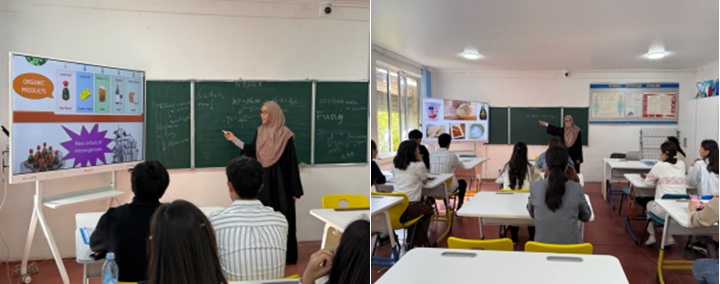
Academic Visit of Professor NOR‘AINI BINTI ABDUL RAHMAN from Universiti Putra Malaysia
Academic Visit of Professor NOR‘AINI BINTI ABDUL RAHMAN from Universiti Putra Malaysia Professor NOR‘AINI BINTI ABDUL RAHMAN from the Faculty of Biology, Biotec
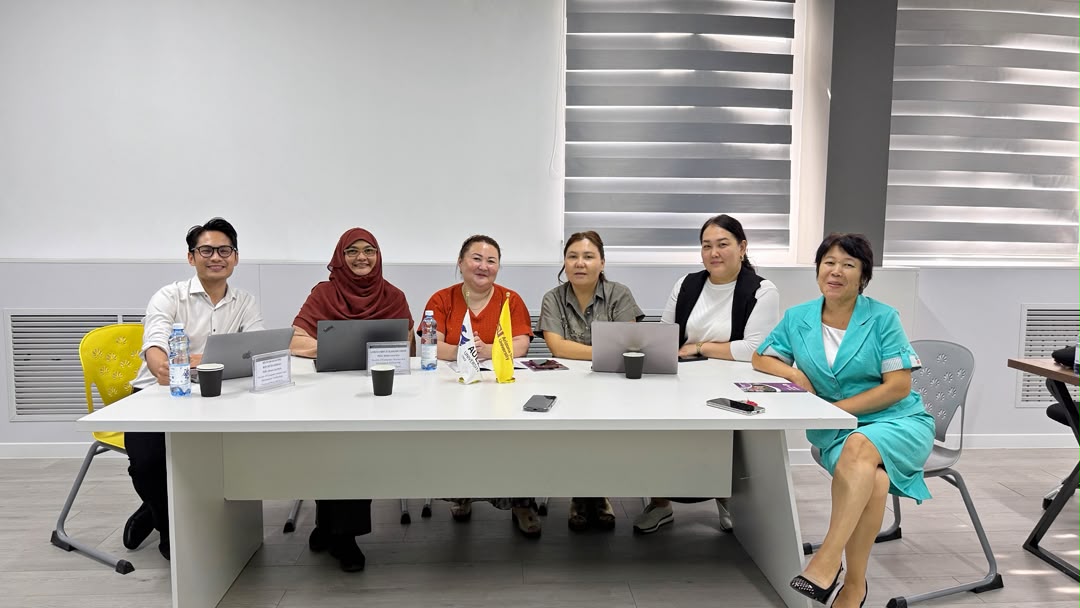
AI WEEK 2026: AI is not only a technology — it is a new way of learning, researching and creating
AI WEEK 2026: AI is not only a technology — it is a new way of learning, researching and creating Discussion on the opportunities for integrating artificial int
EPANNOUNCEMENT
ANNOUNCEMENT The Department of Informatics of M. Auezov South Kazakhstan University announces that the extended departmental research seminar (pre-defense) of t